
What this actually costs you if you wait
One of you thinks the grinding noise and the slight sag on one side is just how the door sounds now. The other one thinks it's a problem. Here's the thing that settles it: a worn roller or a fraying cable doesn't stay a small problem. It becomes a door that comes off track, a cable that snaps under tension and lets a panel drop, or a spring system that's compensating for an uneven door and wearing out twice as fast. Any one of those turns a planned repair into an emergency call — and an emergency call in the middle of a January freeze costs more than a maintenance visit in October ever would, in both dollars and in not being able to get your car out of the garage.
So yes, it's worth the argument. Here's what's actually going on under that noise.
Rollers: the part that fails quietly, then loudly
Every garage door panel rides on rollers set into tracks on either side. Nylon rollers (standard on most residential doors) are built to last several years under normal use, but they wear from the inside out — the bearing or the roller surface degrades before it looks obviously broken. What you hear first is a rhythmic squeak or grind as the door moves, especially noticeable on cold mornings when the lubricant has stiffened. What you see later is a door that shudders, hesitates, or visibly wobbles as it travels, or one side that seems to lag behind the other.
Left alone, a bad roller can bind in the track, forcing the opener motor to work harder than it's rated for, or it can jump the track entirely — which usually means the door stops dead, sometimes halfway open, sometimes with a panel bent from the sudden stop.
Cables: the part that fails loudly, with no warning
The cables connect the bottom of the door to the spring system, carrying the full weight of the door as it travels. They're wound tight, under real tension, and they're the reason a garage door doesn't just free-fall when you disconnect the opener. A cable frays the same way a rope frays — a few strands at a time, usually near the drum at the top or the bottom bracket, right where it flexes with every open-and-close cycle.
You won't usually see this from the ground. What you'll notice instead is a door that closes unevenly, tilting to one side, or one that seems to jerk partway through its travel as the frayed cable catches. Sometimes there's a faint popping or clicking sound as individual strands give way. When a cable finally lets go completely, it doesn't give a warning shot — the door drops unevenly or a panel buckles, and the spring, now carrying the load alone, is often the next thing to break.
This is the detail that actually settles most of these debates: a cable is a small, inexpensive part — commonly in the $15–$30 range nationally — but neglected for a season, it turns into a multi-part repair, and in worse cases, a damaged door panel or opener.
Why this shows up worse heading into winter here
Lawrence County winters are hard on garage doors in a specific way. Freeze-thaw cycles mean moisture gets into every joint and bracket repeatedly, and road salt tracked in on tires accelerates rust on cables, hinges, and tracks. Cold also stiffens lubricant and metal, so a roller that was marginal in September can seize or crack during a January cold snap. A lot of the housing stock in this area is older too, which often means original hardware — cables and rollers that have simply been in service longer than they would be on a newer build, with wear nobody's tracked.
That combination of age, moisture cycling, and cold is exactly why fall is the window to deal with this instead of waiting. A door that's limping along in October with a grinding roller is a door that's more likely to fail outright during the first hard freeze or the first nor'easter, usually at the least convenient moment.
What to actually check before the argument continues
- Listen for grinding, squealing, or popping sounds during a full open-close cycle, not just at the start.
- Watch the door travel from the side — does one edge lag, tilt, or jerk compared to the other?
- Look at the cables near the bottom brackets, not the tensioned spring area, for visible fraying, kinks, or rust.
- Check the rollers where visible for cracked nylon, flat spots, or a wheel that doesn't spin freely.
- Note whether the door has gotten noticeably louder or slower over the past few months — gradual change is the pattern, not a sudden one.
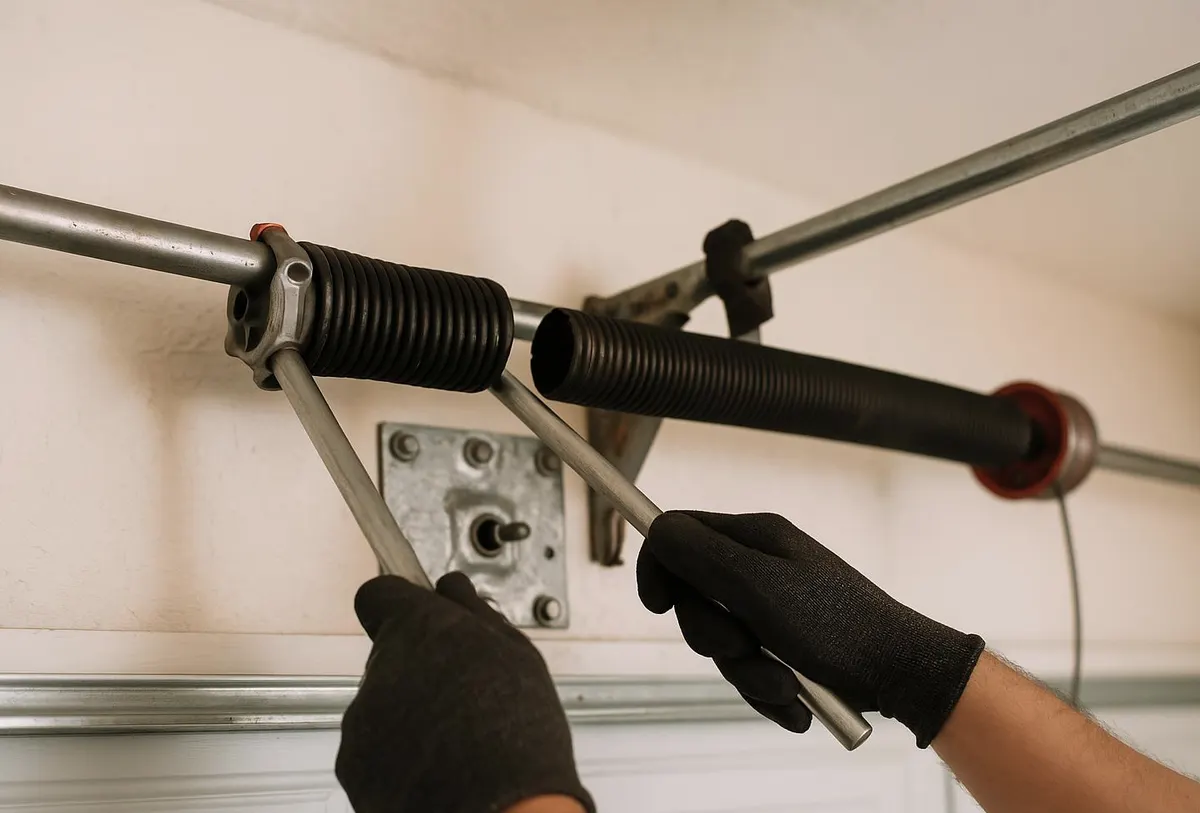
None of this requires touching the spring system or the cables under tension — that part is genuinely dangerous and not a DIY job. But spotting the symptoms is something either of you can do with a flashlight and five minutes.
When to call New Castle Garage Door
If you're hearing the grinding, seeing the tilt, or finding fraying on a cable, that's the point to call rather than wait and see. New Castle Garage Door handles cable and roller replacement as a standalone repair, and it's also something we check as part of a standard garage door maintenance visit — we'll inspect the full roller and cable system, the spring balance, and the track alignment, and replace what's actually worn instead of guessing. If a cable has already let go or a door won't move at all, that's an emergency garage door service call, and we treat it with the same urgency as a door that won't close and lock at night.
Either way, you're not choosing between fixing it now and waiting to see. You're choosing between a scheduled repair on your terms and an emergency repair on the door's terms, usually during the worst week of the winter.
If any of this sounds like your garage door, call New Castle Garage Door today — we serve homeowners and businesses throughout New Castle, Ellwood City, Neshannock, Shenango Township, Pulaski, Bessemer, Wampum, and Edinburg, and we can get a technician out to look at it before the season gets ahead of you.